Local SEO
How to Get Your Small Business Found on Google Before the Holiday Season
Connective Teams · 6 Nov 2026
How to Get Your Small Business Found on Google Before the Holiday Season
Discover how to prepare your storefront for the holiday rush by improving your local search visibility and optimizing your Google presence.
Every November, thousands of shoppers pull out their smartphones while standing outside local storefronts or scrolling from their living rooms, searching for nearby options to buy gifts. If your business fails to appear in those critical mobile map results, potential revenue flows straight to competitors down the street or online giants. Figuring out how to get your small business found on Google requires deliberate preparation long before the first festive lights go up.
Waiting until December to think about search visibility leaves you scrambling while algorithms take weeks to index changes. Local search success relies on a foundation of accurate data, consistent updates, and genuine customer sentiment. By tackling these optimization steps early, you establish a reliable digital pathway that guides eager seasonal buyers directly to your door.
Claiming and Refining Your Google Business Profile
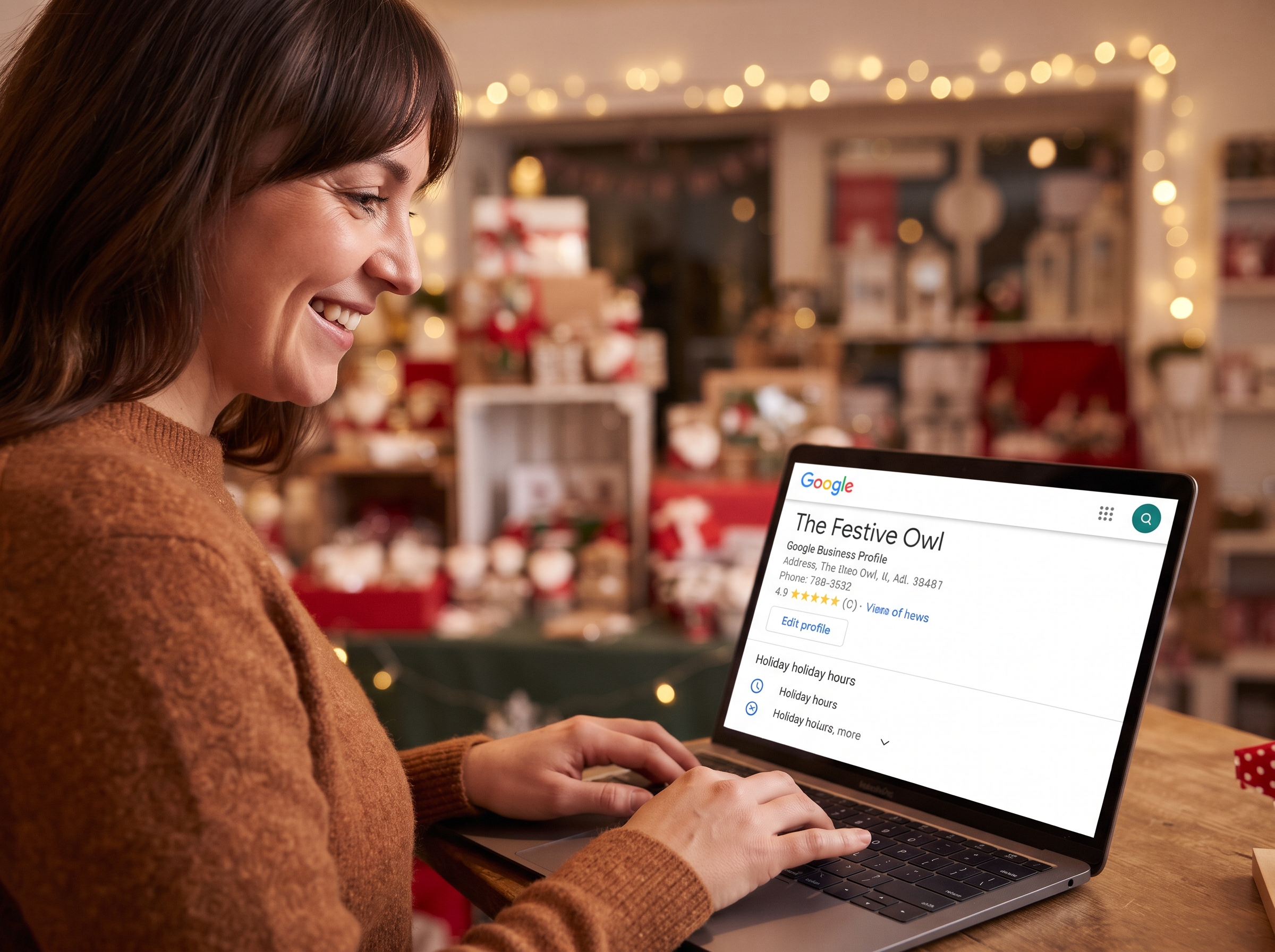
Your Google Business Profile acts as your primary digital storefront. When someone searches for a bakery, boutique, or repair service nearby, the map pack appears before traditional organic website links. Claiming this listing is the single fastest way to establish local authority.
Start by verifying that your business name, physical address, and phone number match your storefront signage and official documents down to the exact suite number. Search engines penalize inconsistency, and minor discrepancies confuse potential buyers trying to visit your location. Add your operating hours now, including special holiday hours for Thanksgiving, Christmas Eve, or New Year's Day, so customers never arrive to find locked doors.
Categories deserve careful attention during this setup phase. Select a primary category that describes your core offering, such as "Gift Shop" or "Toy Store," rather than a broad term like "Retail." Add secondary categories to capture related searches, but avoid listing services you do not actually provide. Upload clear, well-lit photos of your interior, exterior, and popular seasonal products to give searchers a reason to click.
Fixing NAP Inconsistencies Across the Web
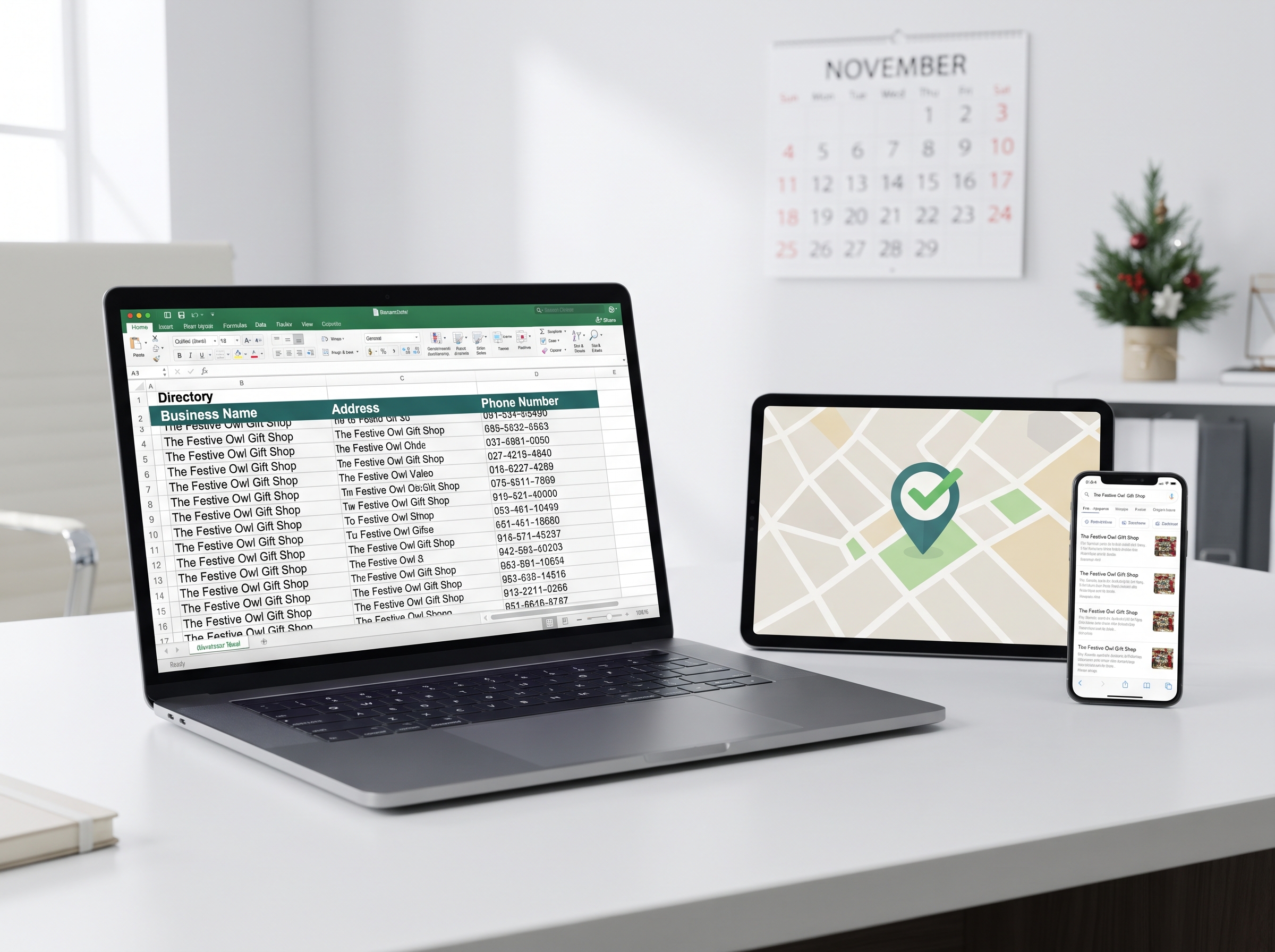
Search algorithms cross-reference your business details across multiple directories, including Yelp, TripAdvisor, Facebook, and local chamber of commerce pages. If your phone number changed six months ago on your social media profile but remains outdated on a directory site, search engines lose confidence in your listing.
Audit your online footprint by searching your business name alongside your city. Compile a spreadsheet of every directory where your business appears. Standardize your Name, Address, and Phone number format across all platforms, ensuring abbreviations like "Street" or "St." remain uniform everywhere.
Why Data Consistency Matters for Local Rankings
Search engines prioritize user trust above all else. When a platform detects conflicting addresses or disconnected phone numbers, it often suppresses the listing to prevent users from encountering broken information. Cleaning up these citations creates a stable signal that boosts your overall local ranking potential without requiring paid advertisements.
Gathering and Responding to Customer Reviews
Social proof drives conversion decisions during high-stress shopping periods. Consumers comparing two nearby stores typically choose the one with recent, detailed reviews praising customer service or product quality.
Encourage loyal customers to share their experiences by asking directly after a successful transaction. Send a polite follow-up email with a direct link to your review profile if you capture customer contact details. Make the process frictionless by removing any guesswork.
Responding to reviews signals activity to search algorithms and builds trust with prospective buyers. Address positive feedback with genuine gratitude, mentioning specific products or services they highlighted. When negative reviews appear, reply calmly, acknowledge the issue, and offer an offline resolution channel. Future shoppers read these responses closely to judge your professionalism.
Crafting Website Content That Answers Local Intent
Your website must support your local search efforts by speaking directly to regional buyers. Generic product descriptions miss opportunities to capture location-specific queries that surge during holiday periods.
Incorporate your city and neighborhood names naturally into your title tags, meta descriptions, and main service pages. Instead of writing a generic header like "Handmade Holiday Ornaments," use "Handmade Holiday Ornaments in Austin, Texas." This contextual clarity helps search engines match your pages with users searching nearby.
Build a dedicated holiday FAQ page addressing common seasonal questions, such as your shipping cut-off dates, gift-wrapping options, in-store pickup procedures, and parking availability. This content captures long-tail search traffic from shoppers who want quick logistical answers before making a trip.

Establishing a Sustainable Optimization Routine
Local search optimization is not a one-time project you complete in October and forget until next year. Search algorithms reward active listings that regularly publish updates, respond to inquiries, and maintain accurate inventory information.
Dedicate thirty minutes each week to posting updates on your Google Business Profile about new holiday arrivals, limited-time promotions, or extended shopping hours. Treat these posts as mini-announcements that keep your brand visible in local feeds.
Juggling inventory, staffing, and customer service during peak shopping seasons leaves little room for digital marketing maintenance. Partnering with a dedicated remote marketing assistant like Marketing Connective provides the consistent oversight needed to keep your search presence sharp while you focus on running your physical operations.
Conclusion
Getting your small business found on Google before the holiday rush requires proactive planning rather than last-minute fixes. By auditing your business profile, cleaning up directory citations, encouraging authentic reviews, and publishing local website content, you position your brand to capture high-intent seasonal shoppers when they are ready to buy.
Frequently asked questions
Short answers to the questions readers ask most often.
When should I start optimizing my local search presence for the holidays?
You should begin optimization well before November. Search engines need weeks to index profile updates, verify business details, and process changes made to your local listings.
Why are NAP inconsistencies harmful to my local search ranking?
Inconsistent names, addresses, or phone numbers across directory sites reduce search engine trust, which can cause algorithms to suppress your listing to prevent user confusion.
How often should I post updates to my Google Business Profile?
Dedicate time each week to post updates about new holiday arrivals, limited-time promotions, or special operating hours to keep your listing active and visible.
Ready to Improve Your Local Visibility?
Let Marketing Connective handle your seasonal local search updates and profile management while you focus on serving holiday shoppers.